QUARTERLY ISSUES
Legacy in
Motion.
Building What
Lasts.
The magazine for social impact leaders who refuse to choose between purpose and sustainability. Strategic thinking for those rebuilding the systems that matter most.
OUR MISSION
We don't write for the sector.
We write for the leaders changing it.
Impctrs Magazine was built for the changemakers who sit at the intersection of purpose and pragmatism, people building organizations, leading movements, and reshaping systems that affect real lives.
Every issue challenges conventional nonprofit thinking, offers frameworks borrowed from the best minds in business, and connects a community of leaders who understand that lasting impact requires both vision and operational excellence.
4
ISSUES ANNUALLY
100%
PURPOSE-DRIVEN CONTENT
1st
IN STRATEGIC EDITORIAL FOR THE SECTOR
INSIDE THE ISSUE
What You'll Find
01
Deep Dive Features & Sector Analysis
Long-form reporting and strategic analysis that challenges orthodoxies and offers new frameworks for thinking about organizational effectiveness, sustainability, and relevance in a rapidly changing world.
02
Leader Spotlights
Intimate profiles of the changemakers building what lasts, their methods, their setbacks, and their vision.
03
Clever Solutions
Practical tools and frameworks drawn from business and applied to social impact contexts.
04
Impctrs Out Loud
Conversations from the podcast brought to the page, unfiltered voices from across the sector.
05
Off the Clock & Community
The human side of impact work: culture, reflection, and the moments that remind us why we do this.
OUR EDITORIAL PILLAR
Content built around what actually moves the needle.
Strategic Leadership
Moving beyond program management to organizational vision, board development, and the hard decisions that define an institution's future.
Financial Sustainability
Systems Thinking
Understanding the ecosystems in which organizations operate — and how to navigate, disrupt, and ultimately reshape them.
Community & Belonging
The connective tissue of this work — relationships, trust, accountability, and the cultures we build inside our organizations and beyond.
The sector doesn't need more inspiration. It needs leaders willing to do the hard, unglamorous work of building organizations that last beyond any one person's tenure.
— IMPCTRS EDITORIAL MISSION
IMPCTRS OUT LOUD
Latest Episodes
Ep. 047
When the Mission Outlives the Founder: Succession Planning for Social Impact Organizations
Guest: Dr. Angela Reeves, CEO — Reeves Leadership Group
What happens when the person who built the organization is the organization? This conversation gets into the hard truth about founder dependency and what it actually takes to build an institution that survives the transition.
58 min · Feb 2026
LISTEN NOW
Ep. 046
The Grant Trap: Why Nonprofits Stay Broke and What to Do Instead
Guest: Marcus T. Webb, Founder — Webb Philanthropy Advisors
A frank conversation about why the nonprofit funding model is broken and the concrete steps organizations are taking to build revenue streams that don't evaporate when a grant cycle ends.
44 min · Jan 2026
LISTEN NOW
Ep. 045
Building Boards That Actually Govern
Sandra Okoye · Board Strategy Institute
58 min · Dec 2025
Ep. 044
Community Trust as Organizational Currency
James Fortunato · Urban Futures Lab
58 min · Nov 2025
Ep. 043
Scaling Without Losing Your Soul
Priya Menon · The Scale Collaborative
58 min · Oct 2025
FROM THE ARCHIVE
Past Articles
Browse All Articles →
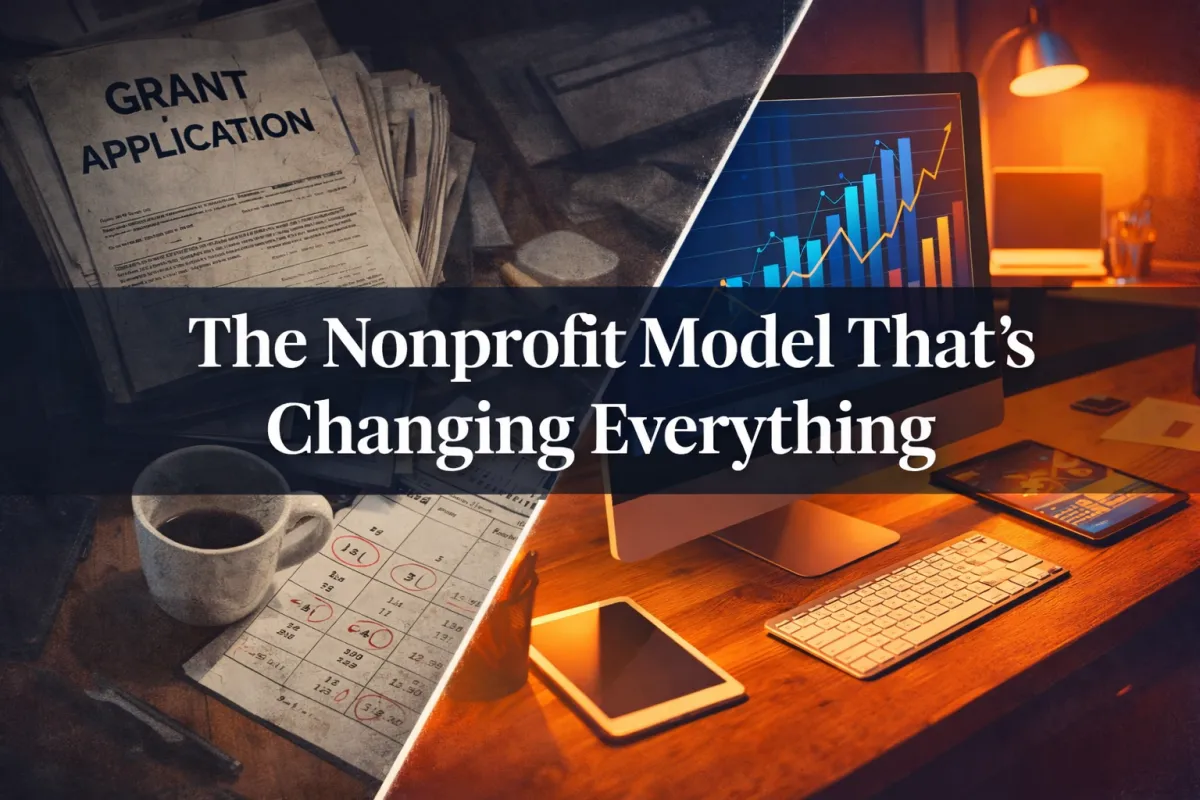
Hybrid Nonprofits Are Printing Money While Traditional Charities Beg for Grants
There's a quiet revolution happening at the intersection of purpose and profit. Most nonprofit leaders are sleeping through it.
Walk into any grant writing conference, anywhere in the country, and you'll hear the same exhausted conversation: funders pulling back, competition intensifying, unrestricted dollars practically extinct. Program officers are fielding 400 applications for 12 grants. Executive directors spend 60 percent of their time chasing money instead of deploying it. The whole system is groaning under its own weight. And yet, right alongside all of that, a growing class of organizations has simply stopped waiting for permission to be financially healthy. They've built something different. They've built something that actually works.
Call it the hybrid nonprofit model. Call it a social enterprise structure. Call it whatever helps you explain it to your board.
The organizations doing it right are calling it sustainable.
At its core, a hybrid nonprofit is an organization structured to pursue a clear social mission while simultaneously running earned income strategies that don't live or die on philanthropic goodwill. Think a 501(c)(3) that operates a fee-based training academy on the side. A community development organization that owns and manages commercial real estate in the same neighborhoods it serves. A workforce development nonprofit that built a staffing company as a wholly-owned subsidiary, generating revenue while providing real employment pathways to program graduates. The legal structures vary considerably depending on state law, organizational capacity, and the specific income streams being pursued. But the philosophy underneath all of it stays consistent: mission first, revenue diversified, dependency reduced.
This isn't a new idea. Settlement houses in the early 20th century ran businesses. Goodwill has been selling donated goods since 1902. What's new is the urgency.
According to the Urban Institute, roughly 30 percent of nonprofits operate with less than one month of cash reserves on hand. One bad funding cycle. One foundation that pivots its strategy to a shinier cause area. One government contract that gets delayed by six months because a state budget didn't pass on time. Any of these things, singularly, can bring down an organization that has faithfully served its community for 20 years. The grant dependency model has a structural flaw that no amount of excellent stewardship or beautiful impact reporting can fully compensate for. It requires someone else to say yes. Every single time. Forever.
Hybrid models change that equation in a real way.
When a nonprofit generates even a fraction of its operating budget through earned revenue, something shifts in how the organization carries itself. Boards start thinking differently. Conversations move from "what do funders want to see" to "what does our community actually need." Executives stop writing proposals from a place of scarcity. Programs get designed around outcomes rather than funder preferences, which, if you've spent any time in this sector, you know is a genuinely radical change. It sounds almost too simple when you say it out loud. In practice, building this model requires serious strategic discipline, and not every organization is ready for it.
Before going further, it's worth pausing here. If you've read this far and found yourself nodding along, there's a good chance your organization is already thinking about this shift, even if the conversation hasn't been formalized yet. The Hybrid Model Readiness Assessment for Nonprofits was built specifically for this moment. It takes about ten minutes, gives you a clear picture of where your organization stands, and identifies the specific gaps that would need to be closed before a hybrid model becomes viable for you. It's free. It's worth doing before you read another word about strategy.
The ones getting it right tend to share a handful of traits worth examining closely.
First, they identified a service that their community actually needs and, critically, would pay for at some price point, without compromising access for people who can't pay. That last part isn't a throwaway caveat. It's the whole ballgame. If your earned income strategy prices out the population you exist to serve, you've drifted from the mission before you've even gotten started. The best hybrid organizations build sliding-scale models, scholarship funds, or cross-subsidy structures into their earned-revenue arms from day one, not as an afterthought when someone raises the equity question at a board meeting.
Second, they built the earned income arm intentionally. Not as an afterthought. Not as something the program director manages in her spare time between grant reports. It has its own staffing, its own financial tracking systems, its own growth targets, and someone accountable for hitting them. Running a business inside a nonprofit is still running a business. The organizations that treat it otherwise tend to discover that the hard way.
Third, and perhaps most importantly, they kept the mission visible in everything the earned income arm does. The revenue exists to fund the work. The work gives the revenue its meaning. When those two things start pulling in different directions, leadership has to have the institutional courage to course correct, even when the money is good.
Consider what's possible when the model actually clicks.
A youth workforce development nonprofit that trains young people in culinary arts opens a catering company. The catering company generates operating income. It provides real-world employment experience for program graduates who can now put a legitimate job on their resume instead of just a training certificate. It creates a visible community presence that attracts corporate donors and event clients who never once responded to a grant solicitation letter. The mission and the market reinforce each other at every level. None of that is accidental. All of it is design. There's a meaningful difference between those two things.
Now. The concerns about hybrid structures are real and worth addressing directly, because glossing over them would be a disservice.
Mission drift is the obvious one, and it's legitimate. When earned revenue starts driving organizational decisions, when programs get quietly cut because they don't connect to the revenue-generating side of the house, the soul of the organization can erode slowly and almost invisibly. By the time the board notices, the community has already felt it. Governance matters enormously in preventing this. Boards need explicit policies for allocating earned revenue. Leadership needs the courage to walk away from income opportunities that pull the organization off course, even when the budget is tight and the opportunity looks attractive.
There are also legal and compliance considerations that catch organizations completely off guard. Unrelated business income, known as UBIT in the tax world, can trigger real liability depending on the nature of the income and the activityis structure. Certain subsidiary arrangements create complications for foundation funding. Some state laws restrict the kinds of commercial activity that 501(c)(3) organizations can engage in. These are all solvable problems. They require competent legal and financial counsel, not Google searches and good intentions.
This is also where a readiness assessment becomes genuinely useful, not just as a thought exercise but as a planning tool. The Hybrid Model Readiness Assessment walks your organization through the governance, financial, and operational dimensions of this transition in a structured way. Leaders who complete it consistently say it surfaces blind spots they hadn't considered, particularly around board readiness and legal structure. If your leadership team is seriously entertaining this direction, going through the assessment together before engaging legal counsel or a consultant can save significant time and money on the front end.
Still. The organizations that have navigated this well are not going back.
They've discovered something that many in the traditional sector remain genuinely reluctant to say out loud: financial independence is a form of mission protection. You cannot serve your community sustainably from a perpetual state of financial crisis. Chronic undercapitalization doesn't just strain budgets. It burns out staff, degrades program quality, forces short-term thinking in organizations that exist to solve long-term problems, and slowly convinces the people doing the work that sacrifice is the price of purpose. It isn't. Or at least it doesn't have to be.
The hybrid nonprofit model isn't a betrayal of social sector values. It might actually be the most serious expression of them.
The question for leaders sitting on the fence right now isn't whether earned revenue belongs in a social impact organization. That debate is largely settled by the evidence. The real question is whether your organization has the strategic clarity, the leadership appetite, and the governance infrastructure to build it correctly. That's a harder, more specific, and more honest conversation than most boards are having.
Organizations building this infrastructure now will have a structural advantage that latecomers won't be able to close quickly. Community trust, operational muscle, market positioning, and staff experience. These things compound over time. They don't appear overnight because a board voted to add a social enterprise line to the strategic plan.
The window is narrowing. Not metaphorically. Actually narrowing.
If your organization is serious about long-term impact, start by understanding exactly where you stand. The Hybrid Model Readiness Assessment for Nonprofits gives you that baseline in under ten minutes. No fluff, no sales pitch. Just clarity on what your organization is actually ready for and what still needs work. That's the right first step, and it costs nothing to take it.
FALL 2025 ISSUE
READ ARTICLES →
FALL 2025 ISSUE
READ →
FALL 2025 ISSUE
READ →
THE ARCHIVE
VIEW ALL ISSUES →
Past Issues
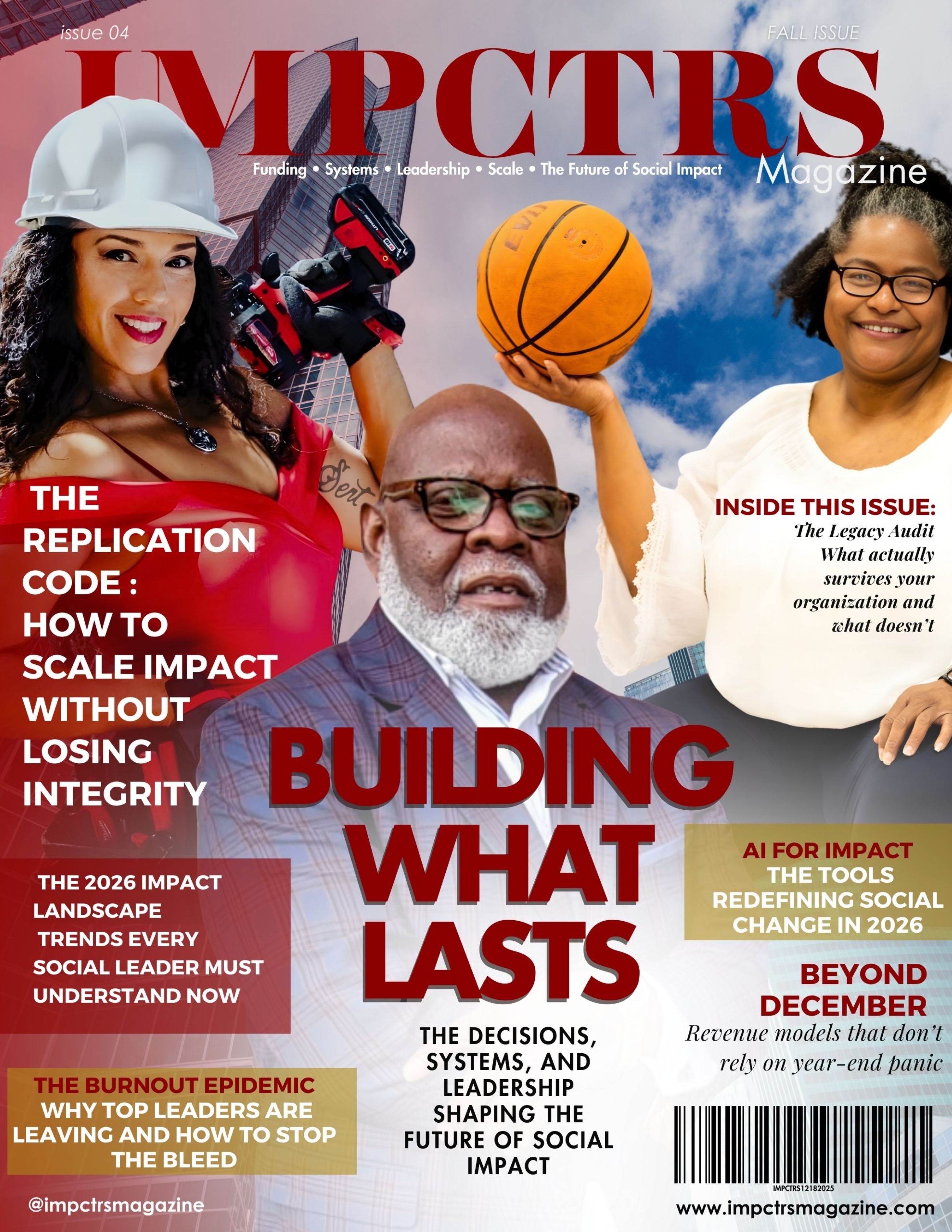
FALL 2025 · 04
Resetting the System: Rebuilding for Stability, Scale & Relevance
VIEW FULL ISSUE →
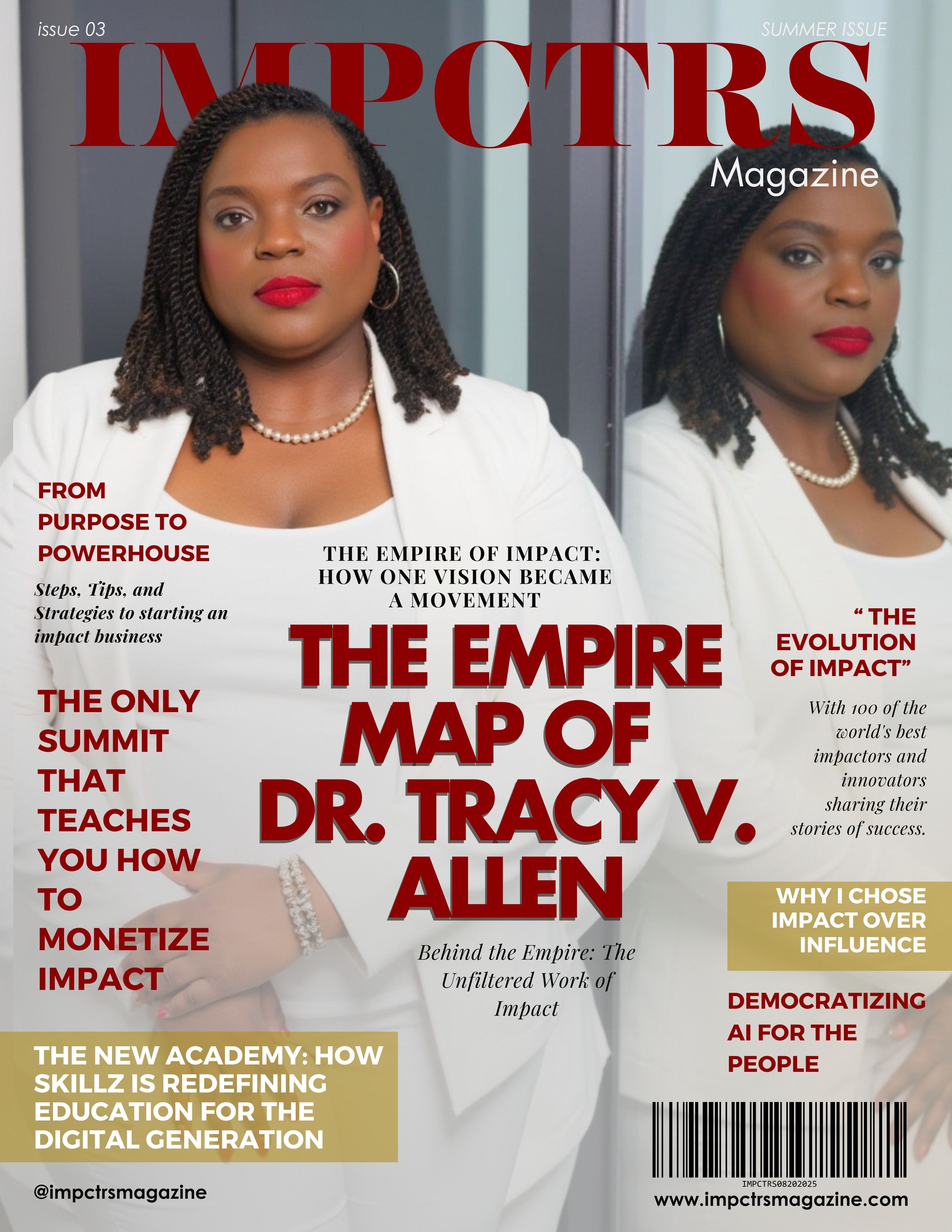
SUMMER 2025 · 03
The Money Question: Funding Models That Actually Work
VIEW FULL ISSUE →
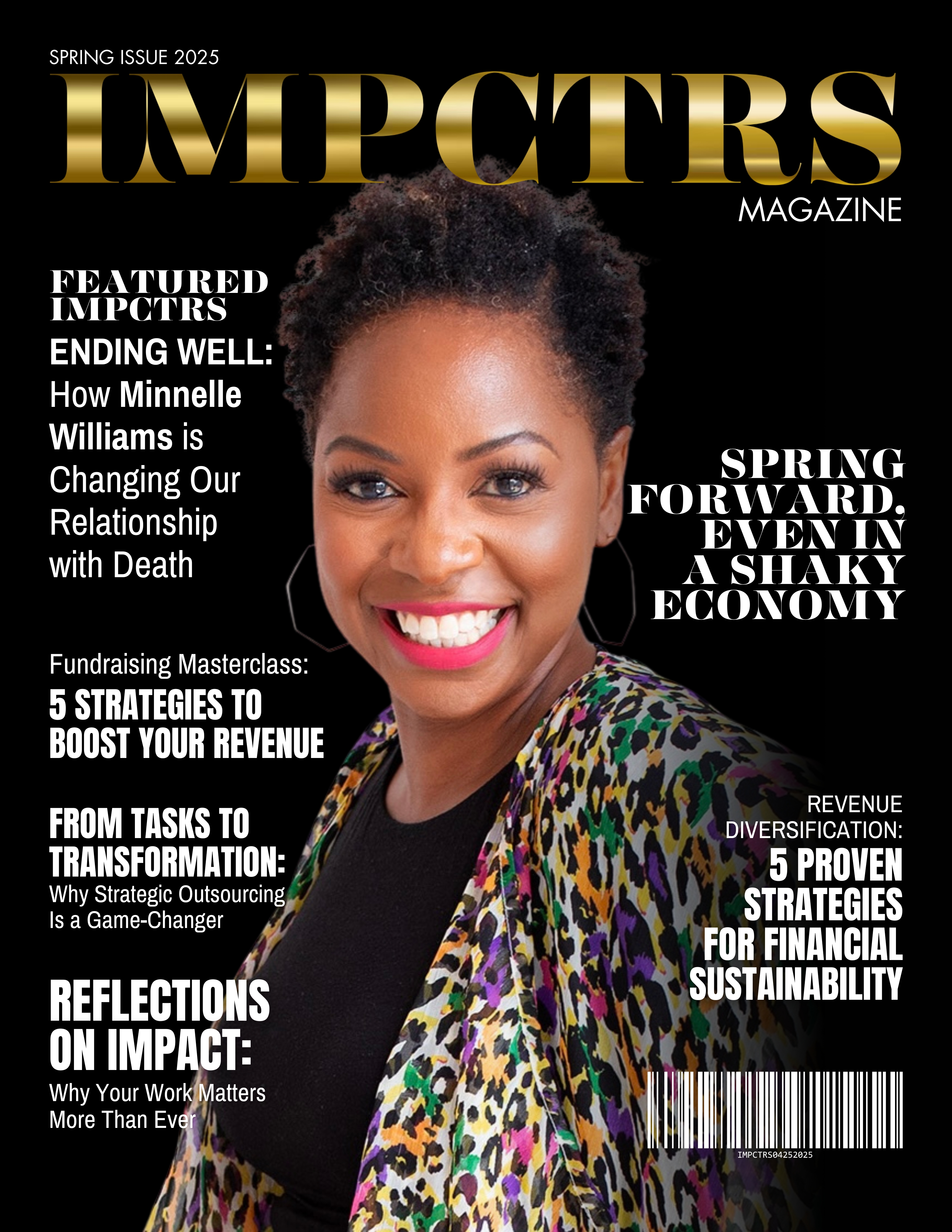
SPRING 2025 · 02
Power, People & Purpose: Reimagining Leadership in the Sector
VIEW FULL ISSUE →
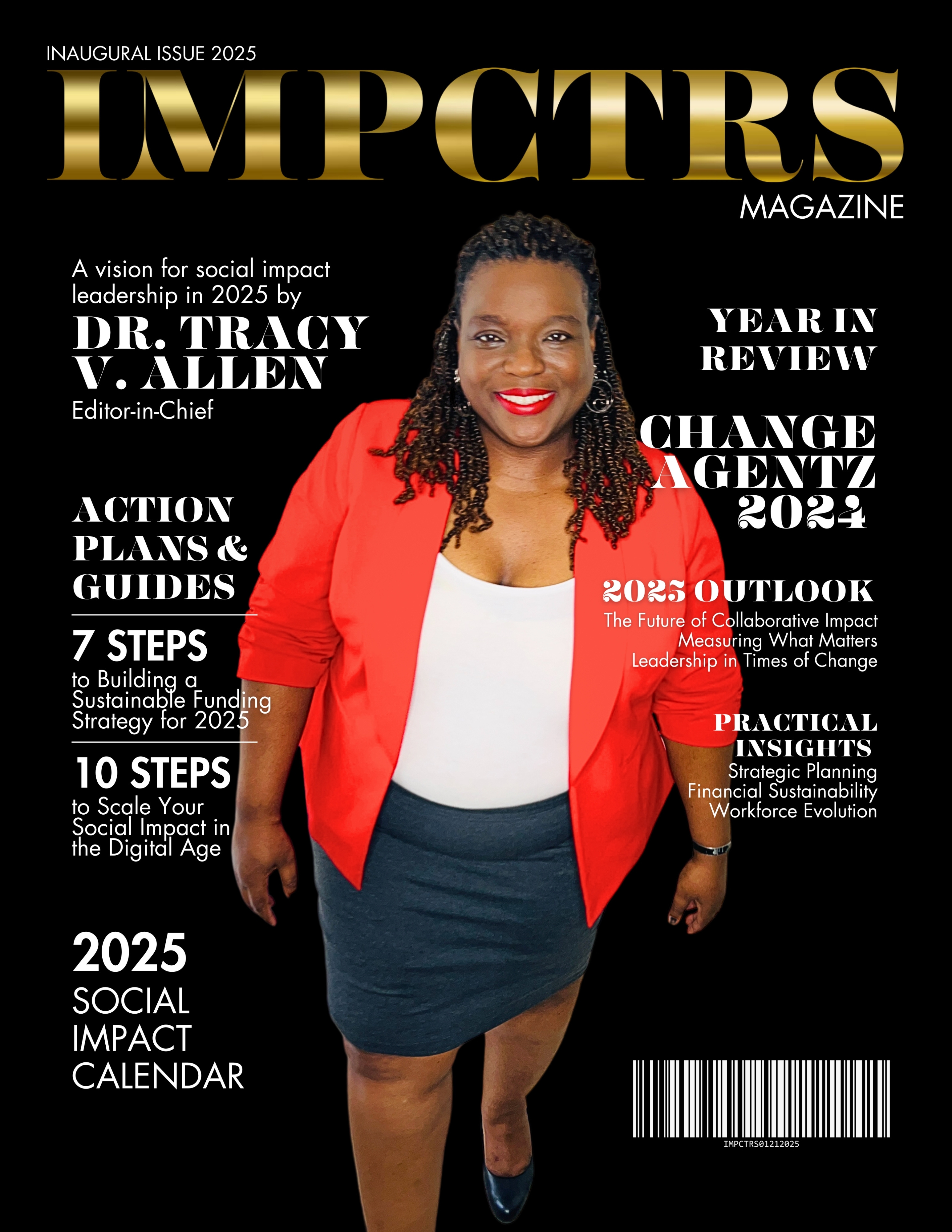
WINTER 2025 · 01
The Inaugural Issue: Why the Sector Needs a Different Conversation
VIEW FULL ISSUE →
Every issue, a new conversation about what it means to build something that lasts.
— JOIN THE COMMUNITY
Receive Impctrs Magazine every quarter.
Delivered to social impact leaders, nonprofit executives, and changemakers who are serious about building organizations and movements that outlast them. No recycled platitudes. No echo chamber content. Just strategic content worth your time.
"For Those Who Change the World — and Intend to Keep Doing It."
FOLLOW US
© 2026 Impctrs Magazine powered by Impctrs Management Group. All rights reserved.